

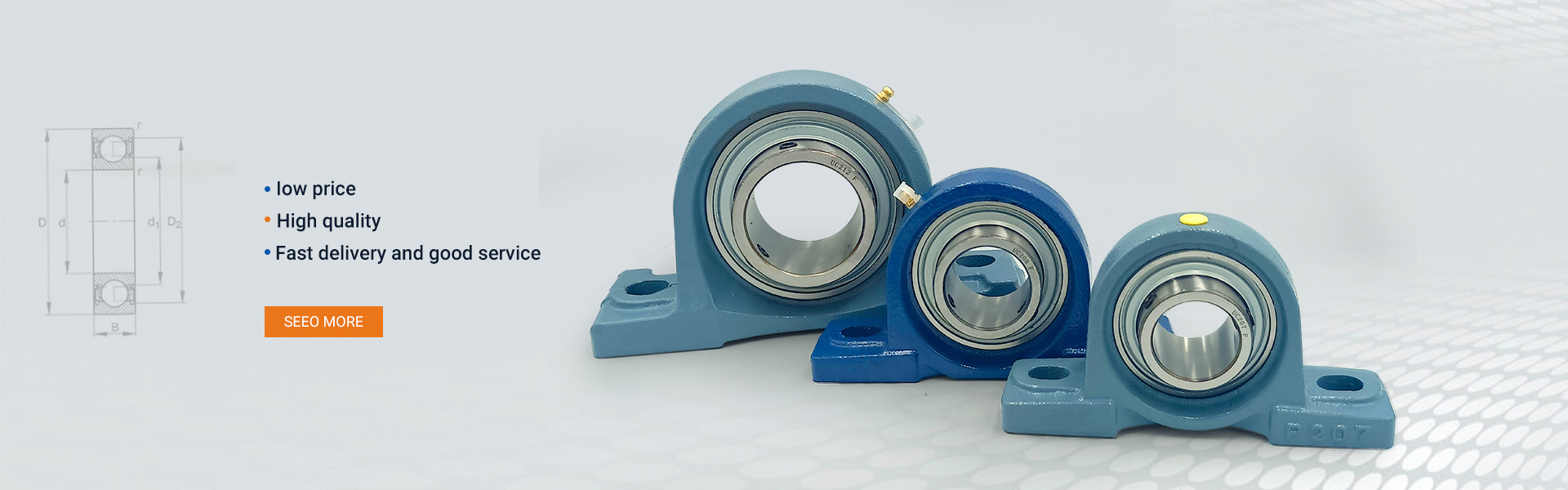
A complete pillow block bearing consists of the following main components:
Core bearing: Essentially, it is a deep groove ball bearing with a spherical outer ring surface and a specially widened inner ring. The spherical design is the key to its self-aligning capability.
Bearing housing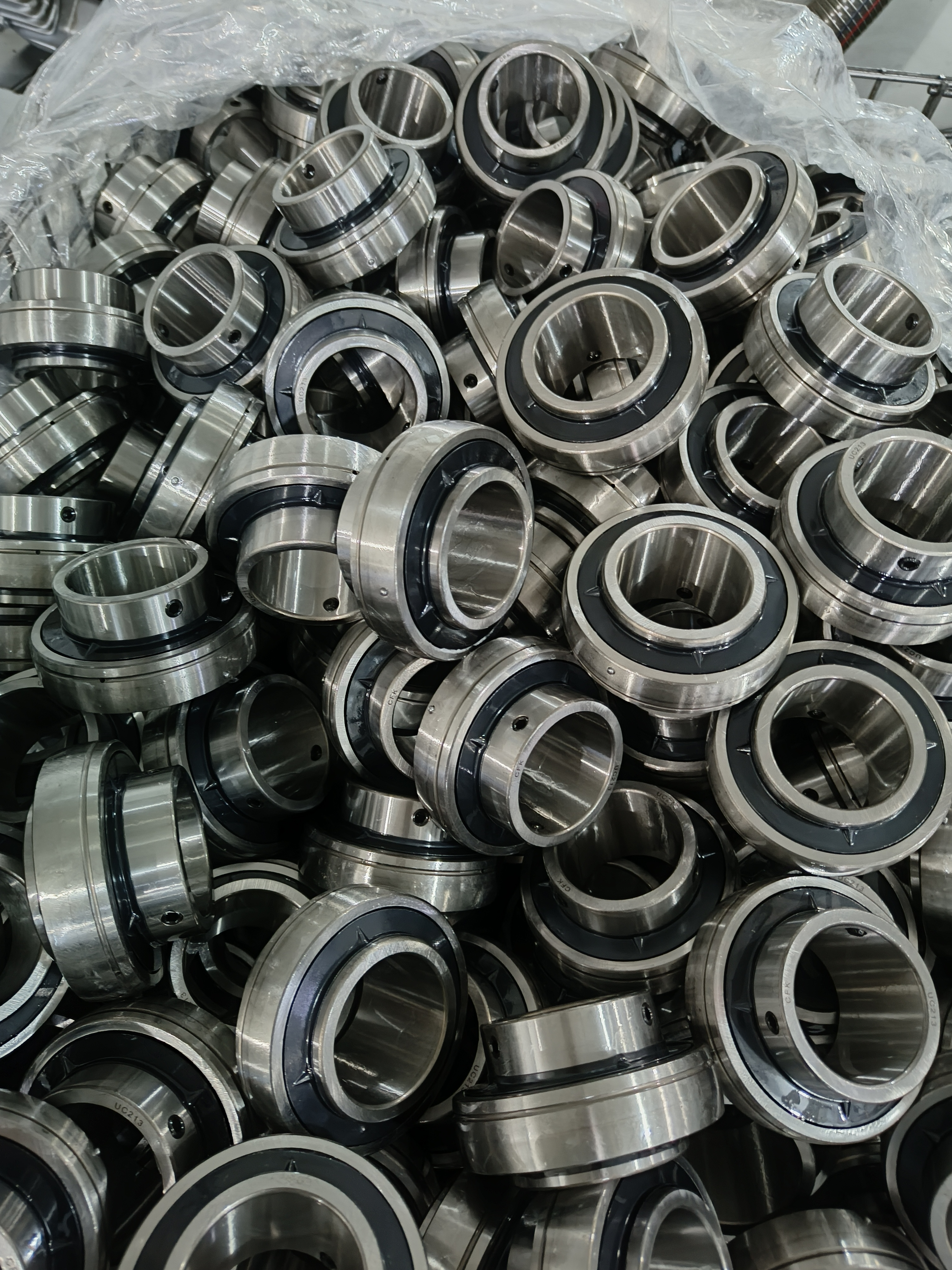 (Housing): It is used to support and fix the bearing, usually made of cast iron or cast steel, and is durable and reliable.
Sealing device: An efficient sealing system is the key for it to work in harsh environments, usually composed of sealing rings and dust covers.
Fastening system: It securely fixes the bearing on the shaft. There are mainly three types:
Screw lock type: The most common type, locked by screws on the inner ring.
Offset sleeve type: Stronger locking force, suitable for heavy loads or impact situations.
Conical hole type: Used in conjunction with the locking sleeve, with high installation accuracy.
Lubrication structure: There are pre-installed oil injection ports on the housing, facilitating the replenishment of lubricating grease later.
How to distinguish quality: When purchasing or inspecting, you can make the following distinctions regarding the quality of bearings.
Bearings inspection:
Body inspection: Check the marking and packaging. The genuine steel marks should be clear and deep, and when touched, there should be a distinct sense of concavity and convexity; the product should have professional inner and outer packaging with clear and complete information.
Appearance and rotation: High-quality bearings have a smooth surface, without burrs, rust, or cracks; when rotated by hand, it should feel smooth and without abnormal sounds.
Size accuracy: Use a caliper or other tools to measure the inner diameter, outer diameter, and width of the bearing, and check if they are in line with the standard specifications.
Bearings housing inspection:
Appearance and material: High-quality bearing housings should have no cracks, sand holes, or casting defects; gray cast iron is often used in general situations, while cast steel has better strength and toughness.
Installation hole spacing: Must be precisely matched with the holes of the equipment frame; otherwise, it cannot be installed. Sealing ring inspection
Material: High-quality sealing rings are usually made of heat-resistant and oil-resistant nitrile rubber or fluororubber, which are flexible and elastic.
Assembly: Check if the sealing ring is installed properly, without damage or distortion, and can form a good fit with the shaft neck.
Fastening system inspection
Screw type: Check if the internal hexagonal hole of the screw head is regular and the thread is clear.
Offset sleeve type: Check if the surface of the offset sleeve is smooth, without scratches, and the locking screw is in a good state.
Lubrication structure inspection
Oil injection port: Should be firmly installed, without loosening or damage, and be able to smoothly add lubricating grease
Post time: Apr-03-2026


